Miles Before the Tent: What Hike-In Camping Gives You That Your Car Never Will
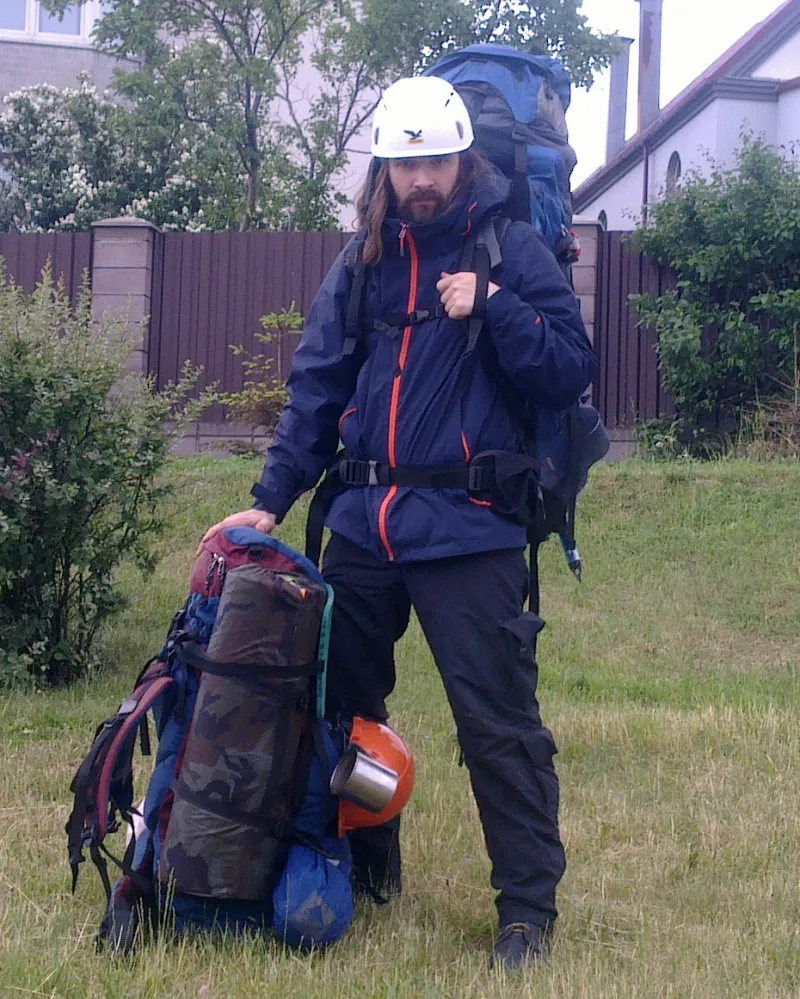
Photo: Henadz Besarab, CC BY-SA 4.0, via Wikimedia Commons
There's a particular sound at a drive-up campground around 9 p.m. It's the hum of a generator, the thud of a car door, the glow of a 60-inch TV running off a battery pack two sites over. None of it is wrong, exactly. But none of it is wilderness, either.
Now compare that to the sound at a hike-in site: wind in the canopy, a creek doing its endless work, your own breathing as you finally shrug off your pack. That difference — the distance between those two soundscapes — is what this whole argument is about.
The Case Against the Parking Lot
Here's the uncomfortable truth: when you can drive your entire lifestyle to a campsite, you tend to recreate the lifestyle you were trying to escape. The cooler stays stocked. The chairs stay plush. The phone stays charged. And the place you pitched your tent starts to look a lot like your backyard, just with worse Wi-Fi.
Walk-in camping breaks that pattern by design. When everything you need has to fit on your back, you're forced into a kind of honesty about what actually matters. You'd be surprised how little that turns out to be.
There's also a fairness argument. Sites that require effort self-select for people who want to be there. Nobody stumbles into a backcountry site by accident. The neighbors you meet on the trail — and at the sites beyond it — tend to be the quiet, prepared kind.
Where the Miles Pay Off
You don't need to thru-hike the PCT to taste this. Some of the best hike-in camping in the country is a modest 2-to-10 miles from a trailhead.
Olympic National Park's coastal strip, Washington. The wilderness coast between Rialto Beach and Lake Ozette might be the most surreal camping in the Lower 48: driftwood-strewn beaches, sea stacks, tide pools, and sites like Birch Point or the camps near Toleak Point. The catch is logistics — you'll need a wilderness permit, bear canister, and a tide table you actually consult. Miss a headland at high tide and you'll be waiting it out, which, honestly, is its own kind of luxury.
Grand Canyon Rim-to-Rim, Arizona. Camping at Bright Angel or Cottonwood campgrounds puts you a mile below the rim, where the Colorado River sounds like weather. Permits for backcountry sites are competitive — the online lottery opens months ahead — but even the corridor campgrounds feel like a different planet once the day-hikers thin out. Pack light anyway; every ounce is a negotiation with the climb back out.
Enchantments Core Zone, Washington. Near Leavenworth, this granite basin of alpine lakes is so beloved it runs on a lottery system with absurdly low odds. Get a day-use permit, backpack in via Snow Lakes, or try the shoulder-season late-release permits. Larch season — that two-week window in late September when the trees turn gold — is worth every failed lottery attempt.
Havasu Falls, Arizona. On Havasupai tribal land, a 10-mile hike to turquoise water you've probably seen on a phone wallpaper. Reservations open in February and vanish fast, so treat it like concert tickets.
Gulf Coast sites in Big Bend, Texas. Less famous, wonderfully empty. Hike into the Chisos or set up along the desert backcountry roads with a permit and nothing but stars for company.
Pack Light, Sleep Deep
The barrier to hike-in camping is almost always the pack list, so here's the short version: bring less than you think.
- Shelter: A lightweight tent or even a tarp-and-bivvy setup. You don't need a four-room palace for two nights.
- Sleep: A quality pad matters more than the tent. Cold ground ruins trips.
- Water: A filter or purifier beats hauling gallons. Know your sources before you leave.
- Food: Repackage into zip bags. Freeze-dried meals have come a long way; so has trail couscous.
- Layers, not bulk: One warm layer, one shell, one spare of anything touching your skin.
Aim for a base weight you can actually carry uphill without resentment. If your pack exceeds 30 pounds for a weekend, something in there is negotiable.
The Permit Game
Most of the best sites gate themselves behind permits, and that's not a bug — it's the system doing its job. A few tips:
- Apply the moment the reservation window opens (often six months out, but check each park — it varies).
- Target midweek dates and shoulder seasons for far better odds.
- Have a Plan B basin, beach, and ridge line. Flexibility wins.
- Read the fine print on food storage, campfires, and group size. Rangers do check, and the rules protect the place you came to see.
The Payoff
Nobody hikes eight miles for a site and then spends the evening scrolling. The miles are the filter and the reward in one. You earn your water views, your silence, your early bedtime. And when you wake up to nothing but birdsong and the smell of pine, you'll understand why we keep saying it: camp deeper, wander further. The trail is the toll, and it's cheap at twice the price.