Free Ground: Where to Find Legal Dispersed Camping in Every US Region
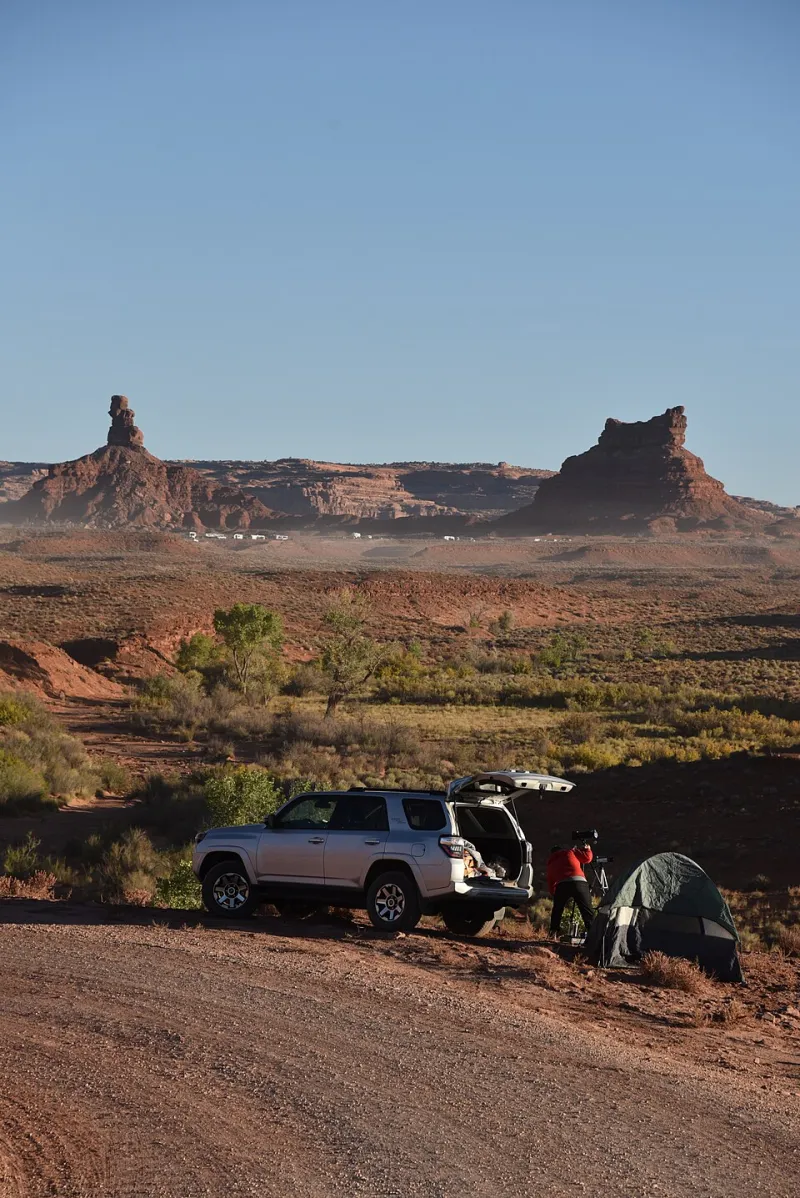
Photo: BLMUtah, Public domain, via Wikimedia Commons
You've been burned before. Recreation.gov opens at 10 a.m. sharp, the site you wanted is gone by 10:01, and the backup is a paved pad wedged between two RVs running generators until midnight.
There's another way. It's called dispersed camping — pitching camp on public land outside developed campgrounds, usually for free, usually without a permit. Roughly 640 million acres of America belongs to all of us. Much of it, you can sleep on.
The Rules Before the Regions
Dispersed camping is governed mostly by the U.S. Forest Service (national forests) and the Bureau of Land Management (BLM). The general defaults:
- Camp in previously used spots and stay under 14 days in most areas
- Park completely off the road — never on vegetation
- Camp at least 100 feet (often 200) from lakes, streams, and springs
- No fires during restrictions; always check local fire danger first
- Pack out everything, including human waste where required
Download offline maps before you lose signal — apps like onX, Gaia, or the free USFS Motor Vehicle Use Maps are non-negotiable.
The Southwest: BLM Country
Where to start: The areas around Moab, Utah; Sedona, Arizona; and the Alabama Hills near Lone Pine, California.
Southern Utah is the dispersed camping capital of the country. BLM land wraps right up to the national parks, and sites along Cache Valley Road (Moab) or FR 525 (Sedona) put you minutes from trailheads with no reservation, no fee, no neighbors. The Alabama Hills sit under the eastern face of the Sierra — free, film-set famous, and vast.
Insider tip: Stay off slickrock in the desert. Cryptobiotic soil crust is alive and takes decades to recover. Use existing pullouts and disturbed pads.
The Rockies and the High Plains
Where to start: National forest land around Leadville, Colorado; the Bridger-Teton outside Jackson, Wyoming; Montana's Bitterroot corridors.
Nearly all of Colorado's mountain national forests — San Isabel, White River, Gunnison — allow roadside dispersed camping on forest roads. Look for worn pullouts with a fire ring already in place; that's the signal that it's legal and established. Higher elevations mean cold nights even in July, so pack for it.
Insider tip: In Colorado, some popular corridors (like near Breckenridge) now require designated sites or permits. Check the district office's page before assuming.
The Pacific Northwest: Rain and Old Growth
Where to start: Washington's Olympic Peninsula forest roads, Oregon's Willamette and Umpqua national forests.
The trick out here is drainage — pick sites on slightly elevated ground, and bring a real rainfly. Forest service roads off Highway 101 and the Mt. Hood corridor hide dozens of flat, mossy clearings within earshot of creeks.
Insider tip: Logging roads change. Recent satellite imagery beats three-year-old blog posts. When in doubt, ask at the ranger station — they'll often mark good legal spots on a paper map for you.
The East and the Appalachians
Where to start: Nantahala and Pisgah national forests in western North Carolina; George Washington and Jefferson national forests in Virginia.
Back East, dispersed camping concentrates along the Blue Ridge. Pisgah's gravel forest roads (like FR 4758 area) and the valleys around Hot Springs, North Carolina, offer shady sites a short drive from Asheville's breweries — a combination hard to beat.
Insider tip: Eastern forests are patchier with private inholdings. Verify every turn with your offline map; the wrong fork can put you on someone's hunting lease.
The Leave No Trace Non-Negotiables
Dispersed camping only stays free if we don't ruin it:
- Existing sites only. Never create a new fire ring or clear vegetation
- Drown, stir, feel. Fires out cold to the touch
- 200 feet from water for dishwater, toothpaste, and everything else
- Bury nothing, burn nothing that didn't grow there
- Take the trash that isn't yours if you have room
Your First Night Out There
Pick a Friday, pick a forest road within two hours of home, and go. No reservation, no check-in window, no neighbor's generator. Just a patch of public ground and the quiet you paid nothing for.
That's the deal public land offers: free ground, as long as you walk lightly on it.