Ditch the Sandals Anyway: A Barefoot Rubric for Judging Any Campground
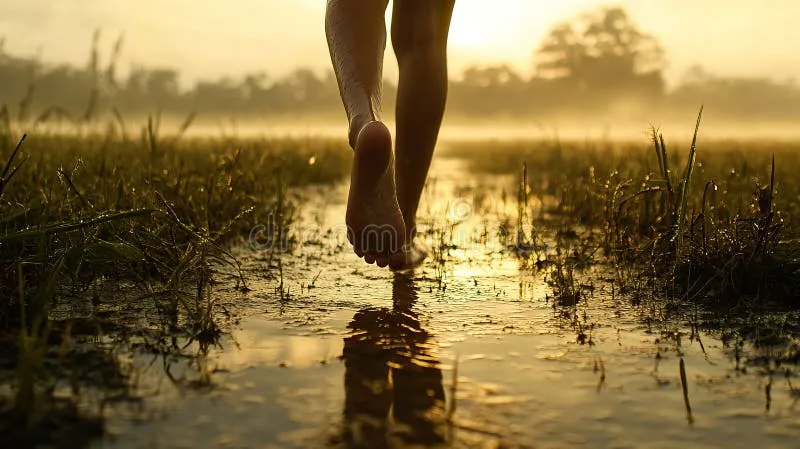
Photo: barefoot person walking on grass path at campsite toward bathhouse morning light, via thumbs.dreamstime.com
There's a moment at every campground that tells you everything you need to know. It's not the view. It's not the fire ring or the amount of space between sites. It's the walk to the bathroom.
If you can make that walk barefoot at 11 p.m. — no headlamp scramble, no gravel hopscotch, no silent screaming — you've found something special. We call it the Flip-Flop Test, and it's named after the humble zori: the flat Japanese sandal built on the idea that comfort shouldn't require effort. You slip them on. You go. The best campgrounds work the same way. Everything you need is close, easy, and gentle on the feet.
This isn't about luxury. Glamping resorts pass the test by default, which is boring. The Flip-Flop Test is about ordinary public and private campgrounds that get the little things right — soft ground paths, a bathhouse that's close but not too close, a picnic table that isn't baking in full sun at dinner time. The details that make a weekend feel easy instead of like a logistics problem.
The Rubric: How to Score Any Campground
Grade each category from 0 to 2 points. Anything above 10 total is a keeper. Above 13, start planning your return trip before you've left the driveway.
The Midnight Walk (0–2 points). Walk from your hypothetical tent site to the nearest restroom. Two points if the path is smooth dirt, grass, or packed sand — surfaces a barefoot human can cross without a vocabulary event. One point for short gravel or pavement with a few rough patches. Zero points if the route involves crushed rock, tree roots, or a hill. Bonus consideration: a path that curves around other sites rather than straight through the middle of them.
Bathhouse Proximity (0–2 points). The Goldilocks zone is a two- to four-minute walk. Close enough for groggy 6 a.m. trips, far enough that you're not smelling the dish station from your tent. Two points if it's in that range and clean. One point if it's in range but questionable. Zero points if it's either a half-mile hike or close enough to hear the hand dryers.
The Shade Situation (0–2 points). Look at the picnic table at 4 p.m. in your mind's eye. Is it shaded? Two points for dappled afternoon cover from deciduous trees. One point for partial shade that migrates. Zero points for a table parked in an open field like a sacrifice altar. Bonus point (yes, we're allowing bonus points) for shade positioned on the west side, where late-day sun actually hurts.
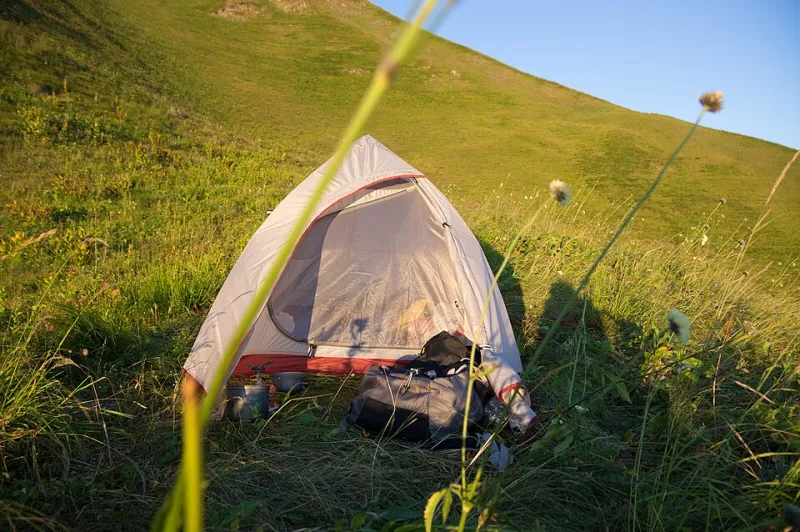
Ground Under the Tent (0–2 points). The pad itself matters. Two points for soft, well-draining soil or sand — the kind you can press a thumb into. One point for firm dirt that takes stakes without a fight. Zero for hardpan, a slope disguised as flat, or a site that's clearly a drainage channel after any rain.
The Barefoot Factor (0–2 points). This is the vibe category. Can you imagine spending a whole day here without lacing up boots? Two points if the site invites barefoot living — grassy common areas, sandy edges, a creek or lake you can wade into. Zero points if every surface within 100 yards is a foot hazard.
The Morning Test (0–2 points). Imagine waking up and making coffee. Two points if everything — water spigot, table, fire ring — is within a lazy ten-step radius. One point if you need a small trek with full arms. Zero if you're hauling a water jug uphill before caffeine. This is the category that separates thoughtfully designed campgrounds from ones that just happened to have flat dirt.
A perfect score of 12 is rare and should be treasured. Most solid campgrounds land between 7 and 9, which is honestly plenty.
Why the Little Things Win
Here's the thing about camping: the big stuff is usually out of your control. The weather, the wildlife, the neighbor's dog. What you can control is whether your site makes the basics frictionless. And frictionless is the whole ethos of the zori — a sandal with no straps to speak of, no breaking in, no ceremony. You step into it and forget about your feet for the rest of the day.
Campgrounds designed with that same spirit let you forget about logistics. You're not managing your campsite; you're just living in it. That's when the actual camping happens — the long mornings, the second cup of coffee, the kid who spends four hours moving dirt from one pile to another.
Campgrounds That Ace the Test
A few US standouts, scored by our entirely unscientific but deeply felt methodology:
Charleston Lake area campgrounds, Adirondacks, New York. Well-packed paths, generously spaced sites under hardwood canopy, and bathhouses that hit the proximity sweet spot. Solid 11.
Huntington Beach State Park, South Carolina. Sand paths, ocean-breeze shade from live oaks, and barefoot living built into the whole coastal ecosystem. The sand costs it points on tent stakes but hands them right back on the Barefoot Factor.
McGregor Lake, Flathead National Forest, Montana. Soft forest floor, grassy picnic clearings, and morning coffee logistics that require roughly nine steps. Bring a warmer sleeping bag than you think you need.
Fitzgerald Marine Reserve vicinity campgrounds, Half Moon Bay, California. Coastal scrub, mild temperatures, and sites where the afternoon shade arrives right when you want it.
Houchin Ferry, Mammoth Cave National Park, Kentucky. Riverside grass, gentle ground, and a bathroom walk that barely registers. The cave tours are a bonus; the barefoot creek access is the real attraction.
Take the Test With You
Next time you're choosing between two campgrounds, skip the photo comparison and pull up the site map instead. Trace the path from a tent site to the bathroom. Look for tree cover west of the tables. Check the ground surface descriptions. Score both, then book.
And if the winner still loses a point for gravel? Pack the zori. That's what they're for.