The Door Faces the Morning: How to Orient a Tent in Ten Minutes
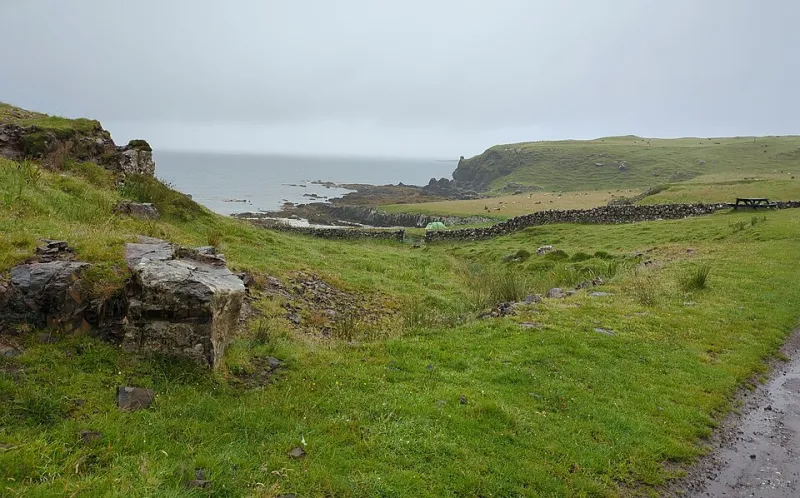
Photo: habiloid , CC BY-SA 2.0, via Wikimedia Commons
Most campsites look the same from the driver's seat: a gravel pad, a picnic table, a fire ring, and a rectangle of ground that seems flat enough. So we park, unroll, and pitch wherever the tent fits. It is a reasonable habit. It is also why some nights feel like sleeping in a hallway while others feel like sleeping in a room designed for you.
At Zori, we have come to think of tent orientation as the cheapest upgrade in camping. It costs nothing, takes about ten minutes, and changes how the night feels before you ever unzip a sleeping bag. The front door of a tent is not just an entrance. It is a decision about wind, light, water, privacy, and what you want to see first when you crawl out.
Flat Is Not a Plan
A level spot keeps you from sliding downhill in the night. That matters. But flat ground is only one variable, and campers tend to treat it like the only one. A perfectly flat site in a wind tunnel is still a bad site. A flat site beside the only water spigot in the loop is still a bad site. A flat site facing the afternoon sun in July is still a bad site.
Orientation is the part of campsite selection that happens after you find the flat spot. It asks a simple question: which way should the tent face? The answer depends on where you are, what season it is, and what kind of morning you want.
The Ten-Minute Arrival Method
Before you unbuckle a single strap, walk the site. Not a quick lap—an actual walk. Here is the routine we use.
- Stand still for one minute. Listen. Look up. Feel the air. You are checking for wind direction, tree hazards, and the general mood of the site.
- Find the prevailing wind. In open terrain, grass and dust often lean one way. In forest, look at which side of the trees has the denser branches. In a developed campground, watch which way smoke drifts from a neighbor's fire. Point the low end of the tent into the wind if you can, and keep the door on the sheltered side.
- Find the morning sun. East is not automatically best, but it is usually the friendliest. A door that catches first light makes a cold morning feel less punishing. In hot weather, you may want shade instead. In cold weather, you want that early warmth.
- Watch the water. Look for low spots, tire ruts, and stained leaves. Those are clues about where rain will gather. Do not pitch in the obvious drainage channel just because it is flat and smooth.
- Check your neighbors. A tent door facing another tent door is a conversation. Sometimes that is lovely. Sometimes it is not. Give yourself a little visual buffer if the campground is busy.
- Choose the view. If you have two equally good spots, pick the one where the door opens toward something worth seeing—a ridge, a river, a meadow, a stand of pines. You will notice it every morning.
- Walk the footprint. Lie down where the tent will go. Check for roots, rocks, and slope. A slight incline is fine if your head is higher than your feet. A slight incline with your head downhill is a long night.
What Each Direction Buys You
Wind protection is the first priority in exposed terrain. A tent broadside to a stiff breeze will flap all night, and flapping is not a lullaby. Angle the tent so the wind hits a corner rather than a wall, and keep the door away from the gust.
Morning sun is the second. In spring and fall, an east-facing door can make a 35-degree morning feel almost civilized. In summer, the same door can turn your tent into a greenhouse by 7 a.m. Adjust by season, not by habit.
Drainage is the third. The best-looking flat spot is often the lowest point in the immediate area. Look for subtle signs: packed dirt, fallen leaves gathered in a line, a shallow channel. If water would flow toward your tent in a storm, it will.
Privacy and view are the softer variables. They are not emergencies, but they are part of why you came. A tent oriented toward a blank wall of shrubs is functional. A tent oriented toward a slow river is a memory.
Terrain Notes
In forest, watch the canopy. Dead branches are called widowmakers for a reason. Orient away from obvious hazard trees, even if it means a less perfect view. In desert, shade is precious and wind can arrive fast. Use rock formations and shrubs as windbreaks, but do not pitch in a wash. In coastal campgrounds, salt wind usually pushes inland in the afternoon. Face the door away from the prevailing blow and stake everything properly. In mountain meadows, cold air settles low. A slight rise is often warmer than a perfect flat pocket.
When to Ignore All of This
If you arrive after dark, safety beats optimization. If a storm is coming, choose shelter and drainage over the view. If campground rules put tents in a specific zone, follow them. And if your ten-minute method starts turning into a thirty-minute debate, pitch the tent. A good enough orientation beats a perfect one you are still arguing about at dusk.
The front door of your tent is a small thing. But it is the frame through which you meet the morning. Point it with a little intention, and the whole campsite starts to feel less like a parking spot and more like a place you chose.