Firewood Doesn't Travel: The Camper's Case for Buying It Where You Burn It
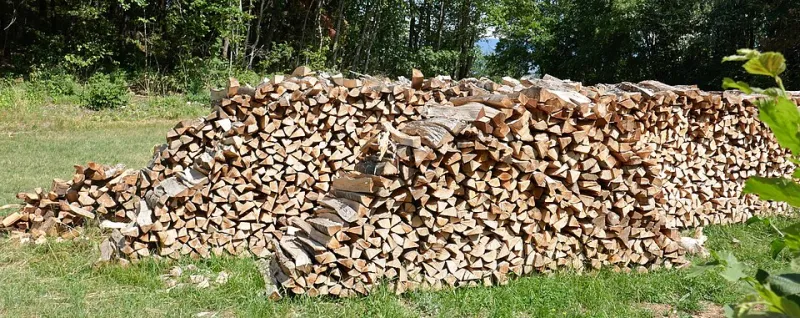
Photo: MHM55, CC BY-SA 4.0, via Wikimedia Commons
Every camping trip has a small moment that feels harmless: loading a few extra logs from the garage into the trunk because you already paid for them. Or grabbing a bundle at a gas station two states from home because it was cheap. Or hauling leftover wood from last weekend's site to the next one because throwing it away seems wasteful.
It is not harmless. Firewood is one of the quietest ways campers move invasive pests around the country. The insect you cannot see may be under the bark, in the outer inch of wood, or waiting to emerge months later. By the time the damage shows up in a forest, the wood has already traveled.
That is why so many states restrict firewood movement. The rules can feel annoying and inconsistent, because they are. But the logic behind them is simple: a campfire should not cost a forest.
The Pest Is Usually Invisible
Emerald ash borer, Asian longhorned beetle, spongy moth, and sudden oak death are not abstract problems. They have already changed forests in parts of the United States, and firewood movement is one of the main ways they spread. A log that looks clean can still carry eggs, larvae, or spores. You cannot inspect your way out of the risk.
The standard remedy is heat treatment. Certified heat-treated firewood has been kiln-dried or heated to a temperature that kills the pests inside. That is why you see stamps and labels on bundles at campground stores and hardware stores near recreation areas. Certified wood is not guaranteed to be from the next county over, but it is treated to reduce the risk of moving live pests.
The phrase to remember is not local. It is certified. Local wood is a good start, but local wood can still carry a pest that has not been detected yet. Heat-treated and certified is the safer bet.
Why the Rules Change at State Lines
There is no single national firewood law that campers can memorize. States set their own quarantines, and the federal government sets restrictions in some areas. Some states ban out-of-state firewood entirely. Some require it to be certified and labeled. Some allow local wood within a certain radius. Some rules are county-specific. Some are species-specific.
That means the rule can change every time you cross a state line, and sometimes every time you cross a county line. The only reliable move is to check before you go. State agriculture departments, state forestry agencies, and individual park websites usually publish the current rules. A quick search for the state name plus firewood quarantine is worth more than a trunk full of questionable logs.
How to Find Wood Near Camp
Start with the campground. Many park stores sell certified wood, and hosts usually know what is allowed. If you are boondocking, look for a local vendor near your last town and ask where the wood came from and whether it is certified. Hardware stores and grocery stores near popular camping areas often carry labeled bundles. Farmers and firewood sellers may sell local wood, but local is not the same as certified.
A practical approach: buy wood as close to the campground as possible, buy certified when you can, and never bring wood from home unless you have confirmed it is allowed. If you are traveling across several states, plan to buy at each stop instead of carrying a week's supply.
A Campfire Checklist
- Leave home firewood at home. This is the simplest rule and the one most people break.
- Buy certified heat-treated wood when it is available.
- Keep your receipt or label if a ranger asks. It is not a badge of honor, just proof.
- Do not move leftover wood to your next campsite. Burn it where you bought it, or leave it with the host if the campground allows that.
- Check fire restrictions before you light anything. A burn ban is not a suggestion.
- Never dump firewood in the woods. That is just moving the problem into a new place.
- Ask questions. A campground host would rather answer them than deal with a quarantine violation.
The campfire is one of the great pleasures of camping. It is also optional. If you cannot find safe wood, use a stove, a lantern, or just sit in the dark. The forest will be better for it.
The Uncomfortable Trade-Off
I like a campfire. I like the smell, the ritual, the way it gives a cold night a center. But I have also driven through forests killed by pests that likely arrived in someone's trunk. That is the trade-off we are making when we treat firewood as a souvenir instead of a regulated material.
The good news is that this is one of the easiest camping problems to solve. Buy it where you burn it. Buy certified when you can. Do not carry wood across state lines. Leave the forest with fewer surprises than you found it.