Sixty Thousand Tiny Lanterns: A Field Guide to America's Firefly Season
Photo: synchronous fireflies glowing in dark forest at night Great Smoky Mountains, via static0.gamerantimages.com
There's a moment, usually about twenty minutes after full dark, when the forest stops pretending to be a forest. The trees go black. The trail disappears. And then, from the ground up, the whole hollow starts to blink.
If you've only ever seen fireflies as scattered backyard sparkles, the first synchronized display is genuinely disorienting. Thousands of insects flickering in unison, a wave of light rolling through the woods like slow applause. It happens for a few short weeks a year in a handful of places, and — here's the good news — most of them have campsites within walking distance.
Why the Sync Happens (and Why It's Rare)
Most of the roughly 170 firefly species in North America are loners. Males blink their own pattern, females answer from the grass, and nobody coordinates. But a few species — most famously Photinus carolinus in the Smokies — are crowd performers. The males flash together in pulses, roughly six quick flashes then a pause, repeated over and over. Nobody fully agrees why. The leading theory is that syncing makes it easier for females to pick out a matching flash from the right species in a cluttered forest.
What matters for you: the window is brutally short. Miss it by two weeks and the show is over.
Where and When to Go
Great Smoky Mountains, Tennessee and North Carolina. The big one. Elkmont's synchronous display runs roughly late May into mid-June, and peak nights are lottery-ticket territory — the park runs a ticketed viewing event, and the surrounding campgrounds book out months ahead. If you strike out, the show continues less famously along quieter park roads and in the surrounding national forest for a week or two after peak.
Allegheny National Forest, Pennsylvania. The East Coast's sleeper pick. Pennsylvania woods host their own synchronous species, and local land trusts around Tionesta have started running guided walks in mid-to-late June. Dispersed camping nearby is legal and free, which pairs nicely with a show that costs nothing.
Midwest bottomlands — Indiana, Ohio, Missouri. The Midwest's floodplain forests have reliable big displays, often a bit later in June and into early July as you move north. State parks along rivers in southern Indiana put you near wet bottomland habitat, which is firefly real estate gold.
The Colorado Rockies, for the night owls. A single valley near Fort Collins hosts the western edge of synchronous territory, usually mid-June. It's a research site more than a tourist draw, so check local university extension pages before planning a trip around it.
Picking Your Site
The rule of thumb: fireflies like damp, dark, and grassy. Bottomland near creeks and rivers beats ridgelines. Avoid sites under heavy light pollution — a gas station glow a mile away can mute a display.
Walk-in sites are your friends here. They're usually farther from bathhouse lights, cheaper, and quieter. At Elkmont and similar busy parks, book the instant the reservation window opens; firefly weekends sell out faster than holiday weekends.
Light Discipline: The Part Everyone Gets Wrong
Fireflies talk with light. Every flashlight beam, phone screen, and lantern is someone shouting over the conversation.
- Red light only, and only when you need it. Fireflies barely register red wavelengths. Rig your headlamp with a red mode before you arrive.
- No flash. Not once. Not "just one shot." A camera flash resets the insects' eyes and ruins the show for the whole clearing.
- Let your eyes adapt. Give them twenty minutes and you'll see more fireflies than any flashlight would have found.
- Stay on trails and off the grass. Firefly larvae live in the soil and leaf litter for a year or two before they ever flash. Stomping the meadow kills next summer's show.
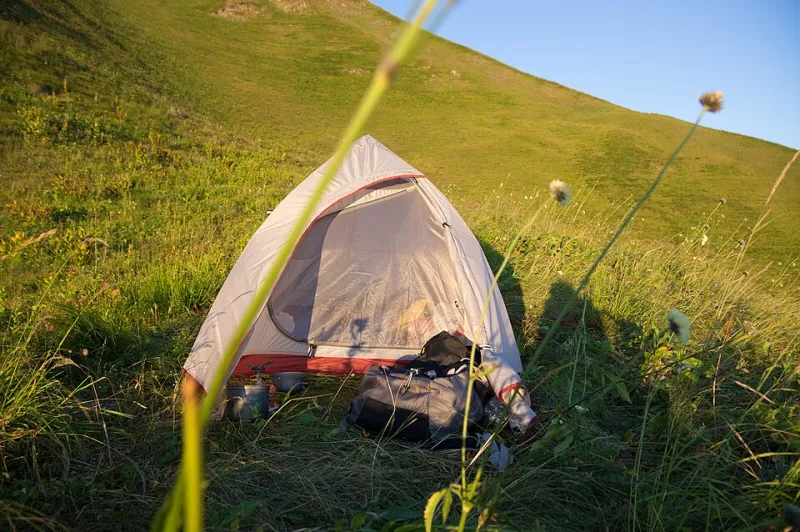
- Kill the campsite lights. If you're camping through the display, run your lantern low or skip it. You're in the theater; let the stage do its work.
The Deeper Payoff
Firefly populations are quietly declining across the US — habitat loss, light pollution, and wetland drainage all play a role. Showing up, camping lightly, and watching without interfering is a small act of voting for the version of summer where the dark still blinks.
Pick a June weekend. Book the walk-in site. Then turn off everything you brought and let the ground do the talking.