When the Last Lantern Goes Out: A First-Timer's Guide to America's Dark Sky Campgrounds
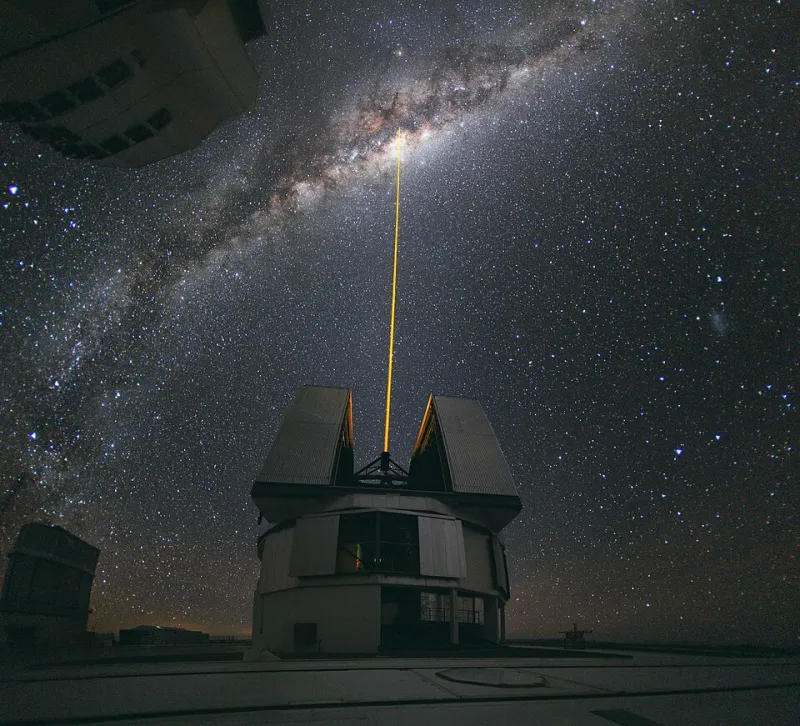
Photo: ESO/Yuri Beletsky (ybialets at eso.org), CC BY 4.0, via Wikimedia Commons
There's a moment at a Dark Sky campground that first-timers never forget. It usually happens around 10 p.m., after the last RV has killed its awning lights and the camp host has done a slow, headlamp-only loop of the loop. The sky doesn't just get darker — it gets taller. The Milky Way shows up like it's been waiting all night for the room to quiet down.
If your usual camping trip ends with a flashlight clipped to the tent and a glow from the nearest town bleeding over the ridgeline, a certified Dark Sky campground is a different animal entirely. And booking one takes a little know-how.
What "Certified" Actually Means
The International Dark Sky Association (now called DarkSky International) certifies places — parks, reserves, sanctuaries — that have made serious commitments to limiting artificial light. For campers, that translates into a few predictable rules:
- Red lights only after dark. Headlamps with a red mode aren't a gimmick here; they're the local currency. White light ruins everyone's night vision for up to 30 minutes.
- No lanterns, no string lights. That cute LED canopy setup from the big-box store? Leave it home. Most hostses will politely ask you to take it down.
- Shielded or off. Vehicle lights should stay off unless you're actively driving. Back into your site before sunset if you can.
None of this is punitive. It's the whole point. You're buying a ticket to a sky most Americans haven't seen since childhood — or ever.
Where to Book, Region by Region
You don't need to fly to Chile for world-class darkness. The US is loaded with certified campgrounds, and a handful are genuinely beginner-friendly:
Northeast: Katahdin Woods and Waters in Maine is remote but forgiving — dispersed sites, no reservation gymnastics, and skies so inky the Milky Way casts a faint shadow on white gear.
Midwest: Headlands Beach State Park in Michigan sits on Lake Erie and offers walk-up dark sky viewing with actual infrastructure. Great first-timer pick if you're nervous about full wilderness mode.
Southwest: This is the promised land. Natural Bridges National Monument in Utah was the world's first certified Dark Sky Park, and its small campground books through recreation.gov — set a reminder, sites go fast in spring and fall.
Texas: Big Bend. Everything about Big Bend. The developed campground at Chisos Basin puts you in a bowl of volcanic rock under a sky that astrophotographers cross state lines for.
West: Death Valley's Furnace Creek is the classic — lowest elevation, warmest winter option, and darkness rated among the best on the continent.
Booking Without the Heartbreak
The competitive-camping problem applies double here, because star-chasers plan around new moons. A few tactics:
- Book around the lunar calendar, not the calendar calendar. A weeknight near a new moon beats a Saturday near a full one every time. Full moon nights at a Dark Sky site are, frankly, a waste of the amenity.
- Check recreation.gov for cancellations. Popular sites like Chisos Basin free up constantly as weather plans collapse.
- Winter is the sleeper season. Dark sky sites in the desert Southwest are glorious and half-empty from November through February. Pack layers.
Etiquette After Lights-Out
The unwritten rules matter as much as the posted ones:
- Arrive and set up before dusk. Fumbling with white headlights at 11 p.m. makes you the least popular person in a five-mile radius.
- Keep your red light pointed at the ground. It still bounces off tent fabric like a stage light.
- Whisper carries. In genuinely quiet places — and Dark Sky sites tend to be genuinely quiet places — sound travels a shockingly long way.
- If you're stargazing from a common area, give the astronomers their space. Telescopes and tripods are territorial.
What You'll Actually Hear
Here's the part nobody warns you about. When the generators stop and the light goes down, your ears recalibrate. At first you notice the quiet — then you notice it isn't quiet at all. Wind moving through ponderosa pines at Natural Bridges. Coyotes trading coordinates across a desert basin in Big Bend. The soft percussion of lake water at Headlands. Owls, everywhere, apparently running the night shift.
That soundscape is the real amenity. A flush toilet is nice. A shower house is nicer. But falling asleep to a landscape that hasn't been sonically edited by highways and HVAC — while a sky full of ten thousand stars hums overhead — is the camping experience everything else is a pale imitation of.
Pack a red headlamp, check the moon phase, and book the weeknight. The sky's been holding your seat.