Between Two Trees: How Hammock Camping Rewrote the Rules of a Good Night Outside
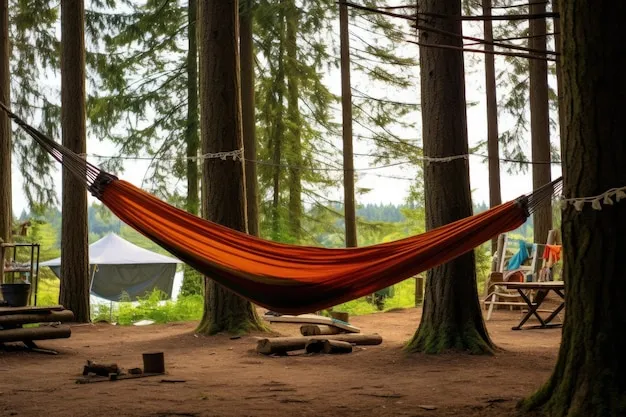
Photo: hammock camping between two trees forest campsite, via img.freepik.com
Somewhere out there tonight, thousands of Americans are going to bed without touching the ground. They're strung between a pair of oaks in a Kentucky hollow, swaying gently over a patch of pine duff in Colorado, or hanging off a balcony rail in a Florida state park where the sites flood every spring. The hammock has stopped being a backyard novelty and become, for a growing crowd, the whole point of camping.
Call it the hammock decade. Sales have climbed steadily through the 2010s and into the 2020s, and the infrastructure followed: outfitters now run hammock-only campgrounds, some Appalachian Trail hostels have installed hanging stations instead of bunks, and gear brands that once treated suspension systems as an afterthought now build entire product lines around them.
Why People Left the Ground
Ask hammock campers why they switched and you'll hear the same answer in different words: the ground lies to you. Every tent camper knows the routine — you find a site that looks flat, crawl in, and discover at midnight that a root has migrated directly under your hip. A hammock doesn't care what's underneath. Rocks, roots, mud, a slope that would send a tent stake rolling downhill — none of it matters when your bed is eight feet in the air.
"I stopped negotiating with the earth," is how one thru-hiker I met at a trailhead in Shenandoah put it. "If there are two trees, I have a campsite."
That's the second reason, and it's the big one: hammocks expand where you can legally sleep. In dispersed camping zones on national forest land, where you're often required to set up a certain distance from water and trails, a hammock lets you camp on ground too steep, rocky, or wet for a tent. Leave No Trace purists will note that a proper hang with tree-friendly straps touches vegetation less than a tent footprint does. You're not compacting soil. You're not trampling a seep or a patch of moss. You're just... there, in the air.
Then there's the sleep itself. A gentle sway, some campers swear, mimics whatever rocked us to sleep as infants. The research is thin, but the anecdotal evidence at any hammock gathering is unanimous: people who tossed for years on pads wake up in a hammock feeling genuinely rested.
What the Gear Makers Say
Talk to people designing hammock gear and a theme emerges: this is a community that iterates fast and shares everything. Online forums and YouTube channels have produced a generation of home-modders sewing their own underquilts and trading suspension setups like baseball cards.
The core kit has settled into a standard: the hammock itself (usually ripstop nylon, rated well past your weight), tree straps that spread load without girdling bark, an underquilt hanging beneath the hammock to block convective cold, a top quilt or bag, a rain fly, and a bug net for anything south of October. The underquilt is the piece beginners always skip and always regret skipping. Air underneath you moves, and moving air strips heat faster than any pad on the ground ever could. Veteran hangers have a phrase for the result: "cold butt syndrome."
"The biggest misconception is that a hammock is lighter than a tent," one small-batch gear maker told me. "A full four-season hammock setup — quilt, fly, net, straps — weighs about what a decent tent does. What you're buying isn't ounces. You're buying versatility."
Your First Night, Step by Step
If you're hammock-curious, don't learn on a summit. Pick a mild, dry weekend close to home and treat it as an experiment.
Find your trees. Two living trees, roughly 12 to 15 feet apart, thick enough that your straps won't bite deep into living wood. Hardwoods beat pines. Aim for straps at about eye level or slightly higher.
Hang shallow, not saggy. New hangers string their hammock drum-tight and then fight it all night. A hang with a generous sag — a comfortable banana curve, maybe 30 degrees off horizontal — lets you lie diagonally, which is the secret to a flat, neck-friendly night. Diagonal is not a compromise. Diagonal is the whole technique.
Test before dark. Get in, shift around, bounce a little. Check your straps after full weight is on them. If anything creaks or slips, fix it in daylight.
Dress for the air, not the air temperature. A 45-degree night under a fly feels very different at altitude with a breeze. Bring a quilt rated at least ten degrees colder than the forecast, and insulate from below no matter what.
Practice the exit. Getting out of a hammock gracefully is a skill. Swing your legs out, sit up, plant a hand. Do it once in the afternoon so the midnight bathroom run doesn't end in a thud.
The Honest Trade-offs
Hammocking isn't free of friction. Treeless terrain — high alpine meadows, desert flats, the prairie stretches of a few Great Plains states — is a no-fly zone, literally. Winter demands more insulation than most beginners expect. And if you camp with a partner who wants to share your shelter, well, the double hammock is a test of any relationship.
There's also etiquette to learn. Wide straps protect bark; thin cord doesn't. In high-use areas, hanging on the same two trees every weekend eventually kills them, which is why some campgrounds now post designated hang rails.
But the trade you're making is real: for the weight of roughly one tent, you get a bed that goes anywhere two trees grow, on terrain no tent would survive, without ever again lying awake wondering what that root is doing to your lower back.
The ground has had a long run. A growing number of campers have decided it doesn't deserve the job.