The Five-Minute Morning Check: What Your Tent Tells You Before Coffee
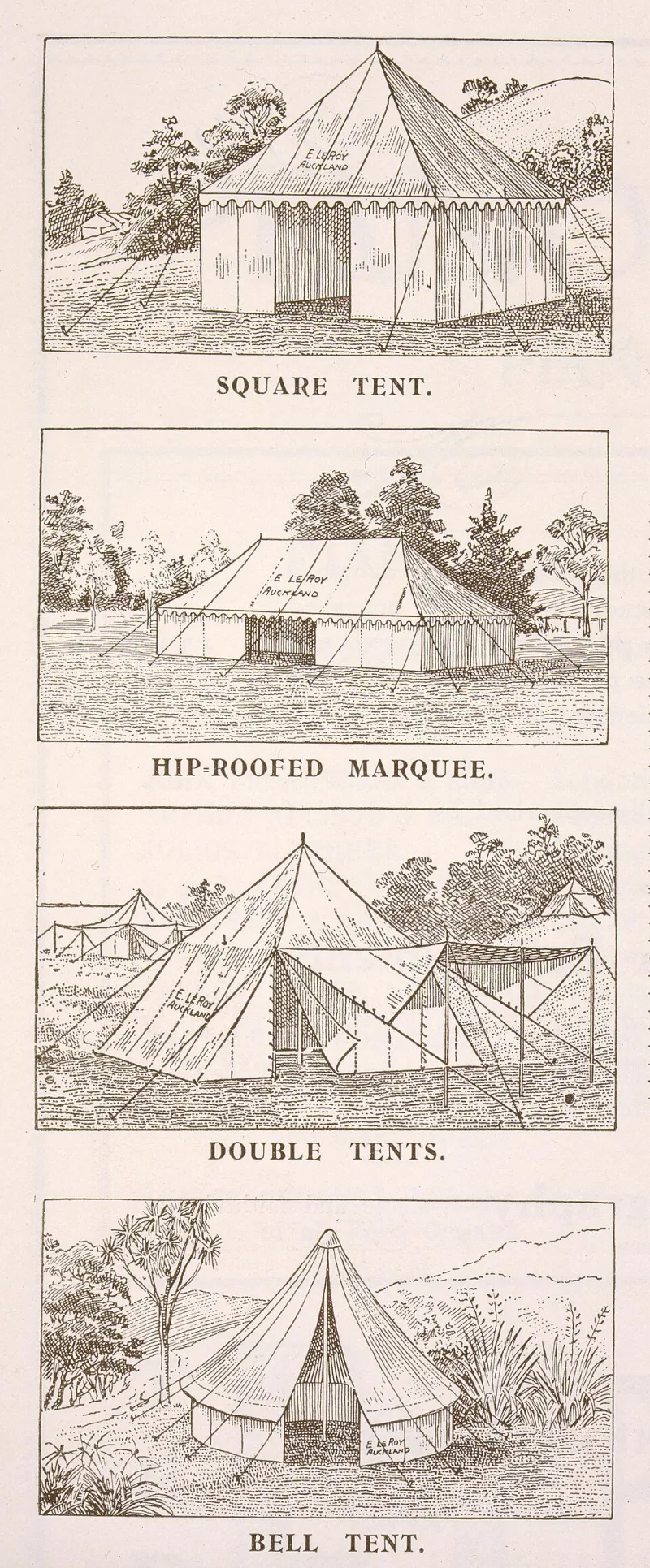
Photo: National Library NZ on The Commons, No restrictions, via Wikimedia Commons
Every tent has a morning routine. Yours, too, probably — unzip the door, duck out, squint at the sky. But somewhere between the coffee and the first trip to the bathhouse, there's a five-minute ritual most campers skip: the walk-around. Tent in morning light, fly still on, dew still sitting where it sat all night.
I used to skip it too. Then I spent a month rotating between four tents — a budget dome, a mid-range backpacking model, a burly car camping palace, and a single-wall ultralight — across Georgia summers and a run of dry nights in the high desert of eastern Oregon. By week two, the walk-around had become the most informative part of my day. The tent was telling me things. I just had to learn the language.
Dew Is a Diary
Here's the thing about condensation: it doesn't lie. Lab tests measure hydrostatic heads and denier counts, but they can't measure how a specific tent behaves on a 78-degree night in Georgia with 90 percent humidity and a creek twenty feet from your pitch. That's dew territory.
The amount of water your fly collects overnight is a diary of the conditions — humidity, ground moisture, ventilation, how many people breathed inside, whether you cracked a vent or sealed the whole thing up against a phantom breeze. A fly soaked like a sponge on a night when the air barely moved tells you your tent runs tight. A fly that's merely damp in the same conditions tells you the ventilation design is earning its keep.
I started keeping notes. Silly, at first. Then genuinely useful.
Reading the Pattern, Not Just the Weight
Where the dew lands matters as much as how much of it there is:
- Dew on the outside of the fly only: Normal. That's just night air doing its thing. It should shake off or burn away in the first hour of sun.
- Wet walls inside the canopy: You've got a ventilation problem — either the design's or yours. Before blaming the tent, check whether you closed vents at bedtime or pitched into the wind.
- Water beading under the fly but not on it: Ground moisture wicking up. Your site choice, not your gear, is the culprit. Move to higher ground next time.
- A soaked interior with a dry fly: Single-wall tents in humid climates. It's physics, not a defect. Know what you bought.
In Oregon's desert, the contrast was almost funny. Nights cold enough to see my breath, mornings bone dry by nine. The same tents that dripped in Georgia were spotless out there. Which raises the honest question every gear review dodges: performance is regional. A tent can be a champion in one climate and a sopping disappointment in another.
The Noon Test
The second half of the ritual happens at pack-up. Walk out at noon and look at the tent one more time. A well-designed fly in even moderate sun and a breeze should be noticeably drier — light, almost crisp, easy to stuff. If you're wringing out panels and packing a tent that weighs double its trail weight in water, that's data. It means you'll pitch it wet tomorrow night, and wet pitches compound: heavier fabric, strained seams, that musty smell that never fully washes out.
Some tents dry fast because of the fabric. Some because of geometry — a steep fly sheds water and catches wind better than a low, slack one. Either way, by the time you've watched four tents through a dozen mornings, you can guess which is which before you check the tag.
Building Your Own Ritual
You don't need a month or four tents. You need five minutes and a little curiosity:
- Before breakfast, circle the tent once. Note where moisture sits and where it doesn't.
- Touch the interior walls. Damp inside means adjust tonight — vents open, doors staked taut, maybe a site with more airflow.
- At noon, feel the fly's weight. If it's heavy, dry it fully before packing, even if it costs you a leisurely lunch.
- Repeat. After three or four outings, you'll know your tent's habits better than any spec sheet.
What the Ritual Taught Me
The biggest lesson wasn't about tents at all. It was about slowing down enough to let gear speak. We buy products based on reviews written in other climates, by testers with different bodies, on trips nothing like ours. But the tent you already own, on the ground you actually camp, is running the most relevant test in the world — every single night.
So tomorrow morning, before the coffee, take the walk. Your tent has been up all night taking notes on you. Fair's fair.